 |
| Tiger Lily Florist, 131 Spring St., Charleston, SC |
I am taking a break from the sadness of watching television news after this terrible shooting in Orlando. I am so sad for the victims and their families.
|
| Tiger Lily Florist, 131 Spring St., Charleston, SC |
 |
| Sumter, SC |


 |
| Hydrangea blossoms, Charleston, SC |
 |
| Charleston, SC |
 |
| Ashley Hall Plantation, Charleston, SC |
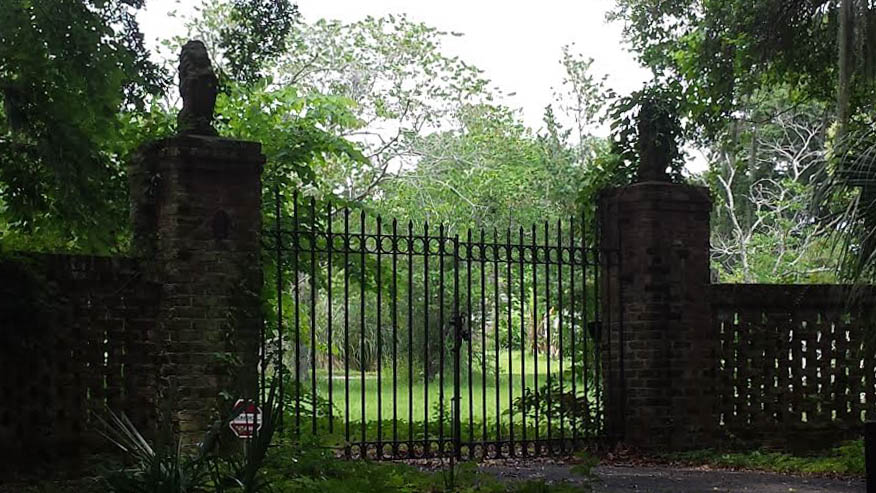
Ashley Hall Plantation, established in the early 1670s, is one of the earliest settlements on the Ashley River. The plantation was established by Stephen Bull, an English settler who arrive in Carolina in 1670. Bull and his descendants (including William Bull and William Bull, Jr.) who lived on the plantation were prominent in such diverse areas as government, science, engineering, agriculture, and military affairs. The Bull family lived at Ashley Hall until 1865, when the plantation house was burned to prevent its destruction by Union forces. The Ashley Hall property contains one of the oldest standing houses in the state (a small ca. 1675 tabby-walled house with a 20th century second story addition), the ruins of the Georgian plantation house (1704) which was burned in 1865, the monument to the second Governor William Bull erected ca. 1791, two prehistoric Indian sites, and two 18th century well sites associated with the plantation. In the 18th century a garden in the Italian style extended from the house to the riverbank. The grounds are much the same as they were originally with open spaces, woods, shrubs, and an unobstructed view of the Ashley River and the city of Charleston beyond. Listed in the National Register June 5, 1975.There is some discussion by family members on this bulletin board although the links in the entry no longer lead anywhere. Apparently the plantation property is for sale so let's get buying those lottery tickets and bring it back to former glory.
 |
| 1st Class Cuts, Spring St., Charleston, SC |

 |
| Charleston, SC |

 |
| Charleston Farmer's Market, Marion Square, Charleston, SC |


 |
| John C. Calhoun goes for an art walk |
 |
| America St., Charleston, SC |

 |
| Old Charleston Jail, Magazine St., Charleston, SC |
 |
| Belvedere Hotel, Charleston, SC |


 |
| Philip Simmons House, 30 Blake St., Charleston, SC |
The Porgy Houses are a series of Charleston residencies that have been enhanced by West-African design motifs seen in the final act of the Festival’s Porgy and Bess. The featured homes have been chosen for their significance in African-American history. Each installation is site-specific and seeks to draw attention to their importance in the history of this city.
 |
| Phili Simmons House, 30 Blake St., Charleston, SC |
 |
| 193-199 Jackson St., Charleston, SC |


 |
| 100 Queen St, Charleston, SC |

 |
| Red solo cups, Charleston, SC |

 |
| Spring St., Charleston, SC |
 |
| 42 Vanderhorst St., Charleston, SC |
The Porgy Houses are a series of Charleston residencies that have been enhanced by West-African design motifs seen in the final act of the Festival’s Porgy and Bess. The featured homes have been chosen for their significance in African-American history. Each installation is site-specific and seeks to draw attention to their importance in the history of this city.
 |
| 91 Spring St., Charleston, SC |
 |
| 218 St. Philip St., Charleston, SC |
 |
| 160 Spring St., Charleston, SC |

 |
| Murals of Avondale, Charleston, SC |
 |
| chART Outdoor Gallery, Avondale, Charleston, SC |
 |
| Coburg Cow, Avondale, Charleston, SC |
 |
| Wood Nymph, Middleton Place, Charleston, SC |
 |
| Birds roosting at Citadel Mall, Charleston, SC |
 |
| The Adventure, Charles Towne Landing, Charleston, SC |
 |
| Ivy covered doors, Meditation Garden, Bon Secours St. Francis Hospital |
 |
| Burial spot inside an ancient oak, Magnolia Gardens, Charleston, SC |

 |
| Ms. Rose's Wall of China, Charleston, SC |


